
Isaiah 41:10 NIV
So do not fear, for I am with you; do not be dismayed, for I am your God.
I will strengthen you and help you; I will uphold you with my righteous right hand
Women's Month
Called for Such a Time As This:
Women of Faith Rising Together
United in Prayer. Empowered by Purpose.
The women of Saint Paul's have been blessed this October with presenting a month of woman focused praise and worship.
Our governing scripture is Esther 4: 14-16

Women's Month
Every woman has a story.
We at St. Paul's wanted to highlight women in history that display God's plan for us.
This space is a great opportunity to give a full background on who they are, and more importantly, who we are becoming as women of faith. We have 4 words that demonstrate the work of God's will in our lives and the women we feel exemplify these traits.
Called. Courage. Conviction. Commissioned.
Meet our Called, Courageous, Convicted and Commissioned Women of Faith.

Queen Esther
Called
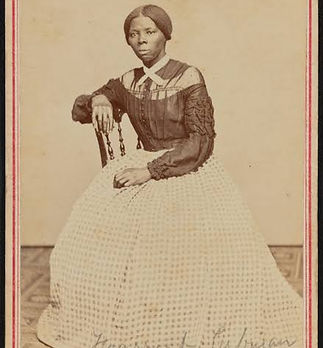
Harriet Tubman
Courage
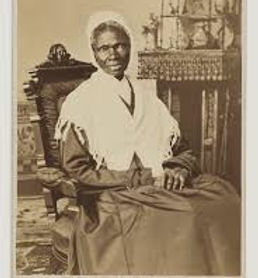
Sojourner Truth
Courage
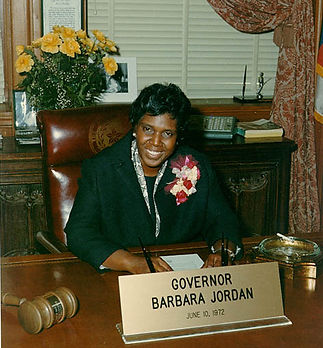
Barbara Jordan
Convicted

Fannie Lou Hamer
Convicted

Ella Josephine Baker
Convicted

Diane Judith Nash
Convicted
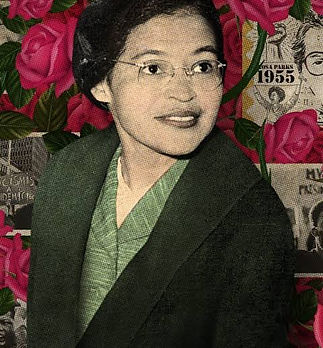
Rosa Parks
Convicted
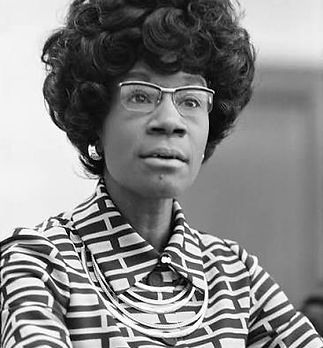
Shirley Chisolm
Convicted
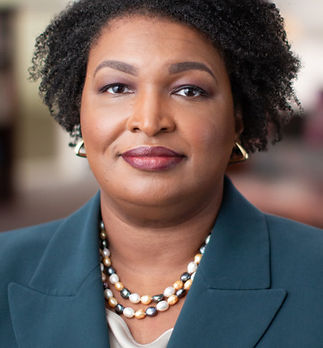
Stacey Abrams
Comissioned

Kamala Dev Harris
Commissioned
Esther
For Such a Time as This
Theme Scripture: Esther 4:14 — “And who knows but that you have come to your royal position for such a time as this?”
The book of Esther reminds us that God can use ordinary people in extraordinary ways. Esther did not begin her life in a palace. She was an orphan raised by her cousin Mordecai, who cared for her as his own daughter. Yet God placed her in a position of influence at the exact moment her people needed deliverance.
God Uses People Who Are Willing to Listen
Mordecai’s relationship with Esther was more than family; it was a relationship of guidance, protection, and wisdom. Esther listened to Mordecai’s counsel, even when she was in the palace. This shows us the value of godly voices in our lives. God often sends people to guide us, encourage us, and remind us of our purpose.
Before Esther Took Action, She Sought Strength
Esther did not rush into the king’s presence on her own strength. She asked the Jewish people to fast with her for three days. This teaches us that some battles require spiritual preparation. Before we speak, move, decide, or confront a situation, we should seek God’s wisdom and strength.
Courage with Faith Over Fear
Esther knew that going before the king without being summoned could cost her life. Still, she chose to act. Her words, “If I perish, I perish,” reveal a heart that was willing to trust God even when the outcome was uncertain. Courage is not never being afraid; courage is obeying God in spite of fear.
Your Position May Be Part of God’s Purpose
Mordecai challenged Esther to consider that she had come to the kingdom “for such a time as this.” In the same way, God can use where we are, what we have experienced, and the influence He has given us for His purpose. We may not always understand why God places us in certain spaces, but we can trust that He is able to use us there.
Devotional Reflection
Like Esther, you may be facing a moment that requires courage, wisdom, and faith. God may have placed you in your family, workplace, church, community, or season of life for a reason. Do not underestimate what God can do through a willing heart. When you seek Him, listen to wise counsel, and step out in faith, He can use your obedience to bless and protect others.
Prayer
Lord, help me to recognize the moments You have prepared for me. Give me wisdom to listen, courage to act, and faith to trust You even when the way is uncertain. Use my life for Your purpose and help me to be faithful for such a time as this. Amen.
Harriet Tubman
A Life of Courage, Faith and Determination
Harriet Tubman was one of the bravest and most important freedom fighters in American history. Harriet Tubman was born Araminta Ross in Dorchester County, Maryland into slavery. Harriet’s actual birthday is unknown. It is believed that she was born between 1819 and 1823. Even though she lived during a time when the law treated enslaved people as property, Tubman believed deeply in freedom. Her courage helped her escape slavery, but her greatest legacy came from returning again and again to help others become free. Through her work on the Underground Railroad, her service during the Civil War, and her support for equal rights, Harriet Tubman became a powerful symbol of justice and determination.
She grew up facing hardship, cruelty, and the constant fear of being separated from her family. As a child, she was forced to work while still very young and experienced the violence and injustice of slavery. She was separated from family members and suffered a serious head injury when an overseer threw a heavy object that struck her. This injury affected her throughout her life, but it did not take away her strength or her desire to be free.
Tubman was also deeply religious, and her Christian faith gave her comfort, courage, and a sense of purpose. Instead of giving up, Tubman developed courage, faith, and determination that would guide her for the rest of her life.
In 1844 she married John Tubman, a free African American. In 1849, Tubman escaped slavery and reached freedom in Philadelphia. Before escaping she changed her name from Araminta to Harriet, after her mother, and adopted her husband’s last name.
In 1849, Tubman escaped slavery and reached freedom in Philadelphia. However, she did not remain in the North and forget those who were still enslaved. She came back for her husband but he had married another woman. Harriet made the dangerous decision to continue to return to Maryland to rescue family members and other enslaved people. Tubman became one of the most famous conductors on the Underground Railroad, a secret network of people, routes, and safe places that helped freedom seekers escape. Tubman often relied on prayer and believed that God guided and protected her during these dangerous journeys. She became known as “Moses” because she led people out of bondage, and she was widely remembered for never losing anyone she guided to freedom.
Tubman’s fight for freedom continued during the Civil War. She served the Union Army as a nurse, cook, scout, and spy. Her knowledge of the land and her ability to move carefully through dangerous areas made her valuable to the Union cause. In 1863, she helped with the Combahee River Raid in South Carolina, an operation that freed more than 700 enslaved people. This work showed that Tubman was not only a rescuer on the Underground Railroad but also a leader who helped to weaken slavery during the war.
In March of 1869 when Harriet was about 59 years old she married Nelson Davis who was 22 years younger. They spent the next 20 years together. Nelson suffered from tuberculosis and could not work on a consistent basis. In 1874 they adopted a baby girl named Gertie.
After the Civil War, Tubman continued to live a life of service. She helped people in need, supported civil rights, and became involved in the women’s suffrage movement. Tubman understood that freedom was not only about escaping slavery; it was also about having equal rights and dignity. Her life inspired abolitionists, soldiers, suffragists, and future generations who believed in justice.
Harriet Tubman’s story is important because it shows how courage and determination can change history. She refused to accept slavery as her destiny and then risked her own safety to help others find freedom. From the Underground Railroad to the Civil War and later civil rights work, Harriet Tubman dedicated her life to helping others. Her legacy remains powerful today due to standing on her faith in God. She proved that one person can take a stand against injustice and make a lasting difference.
Harriet Tubman died from pneumonia on March 10, 1913, in Auburn, New York. She was buried with military honors at Fort Hill Cemetery in Auburn, New York.
Sojourner Truth
An Abolitionist and Women’s Rights Advocate
Early Life
Sojourner Truth was born Isabella Baumfree around 1797 in Ulster County, New York. She was born into slavery and grew up speaking Dutch as her first language. As a child, she was sold several times and experienced the cruelty and separation that were common under slavery.
Freedom and a Historic Court Victory
In 1826, Isabella escaped slavery with her infant daughter after her enslaver failed to keep a promise to free her. Soon after, she learned that her young son Peter had been illegally sold away. She took the case to court and won his return in 1828, becoming one of the first Black women in the United States to successfully sue a white man and win.
Religious Faith, Activism and Public Speaking
She was deeply religious and identified as a Christian. Her faith strongly shaped her life and activism. After gaining freedom, she joined religious communities in New York and became known as a powerful preacher. When she changed her name to Sojourner Truth in 1843, she said she felt called by God to travel and speak the truth. She became a powerful preacher, abolitionist, and advocate for women’s rights. Her speeches challenged slavery, racism, and sexism. She became especially famous for her 1851 speech often remembered as “Ain’t I A Woman.” Many of her speeches used religious language and biblical ideas to argue for freedom, justice, and equality.
Civil War Work and Later Years
During the Civil War, Sojourner Truth helped recruit Black soldiers for the Union Army and supported formerly enslaved people. After the war, she continued to speak for equal rights, including land ownership and voting rights. She died on November 26, 1883, in Battle Creek, Michigan.
Legacy
Sojourner Truth is remembered as one of the most important voices for freedom and equality in American history. Her courage, faith, and determination helped inspire later generations of civil rights and women’s rights activists. Today, she is honored through monuments, museums, and educational programs across the United States.
Barbara Jordan (1936-1996)
American politician, lawyer, civil rights leader, and educator who became the first African American woman elected to the Texas Senate since Reconstruction. She was the first Black woman to preside over a U. S. state government (acting Governor of Texas), and represented Texas in the U. S. House of Representatives from 1973-1979.
Congresswoman Jordan’s strong moral presence guided her in her fight to make American democracy fair for minorities and women. As such, she helped to expand the Voting Rights Act of 1975 to give legal protections to Hispanic and Latino voters. After leaving politics, she taught public policy at the University of Texas. In 1994, she was awarded the Presidential Medal of Freedom, the highest civilian honor in the U.S. by President Clinton.
Fannie Lou Hamer
Leader of the Voting and Civil Rights Movement
Fannie Lou Hamer emerged as one of the most powerful grassroots leaders of the Civil Rights Movement, becoming nationally known for her leadership in voting rights. She began her activism in 1962 when she and 17 others attempted to vote in Mississippi, but failed the literacy test which meant they could not vote. After several attempts, she became a registered voter. But when she attempted to vote that fall, she discovered her registration did not allow her to vote as her county also required voters to have two poll tax receipts.
After these incidents, Fannie began to become more involved and organized Mississippi’s Freedom Summer with the Student Nonviolent Coordinating Committee. and became active in the Southern Christian Leadership Conferences. In spite of being threatened, harassed, assaulted, shot at, beaten and jailed, Hamer began to organize voter registration drives.
In 1964, she co-founded the Mississippi Freedom Democratic Party, and traveled to the Democratic National Convention to stand as the official delegation from Mississippi. It was here where she gave her powerful televised testimony against racial violence and voters in Mississippi. She ran for a seat in the U. S. Congress in 1964, the Mississippi State Senate in 1971, and led legal action against the government of Sunflower County, MS for continued illegal segregation. One of her famous quotes is “I’m sick and tired of being sick and tired.”
Mrs. Hamer received numerous awards. In 1993, she was inducted into the National Women’s Hall of Fame, was posthumously awarded the Presidential Medal of Freedom by President Biden in 2025, and is an honorary member of Delta Sigma Theta, Sorority.
Ella Josephine Baker
American Civil Rights Activist
Ella Josephine Baker was another American civil rights and human rights activist whose career spanned more than five decades as a behind the scenes organizer. She was a teacher and mentor to the young people of the Student Nonviolent Coordinating Committee. Through SNCC, Baker’s ideas of group-centered leadership and the need for radical democratic social change spread throughout the student movements of the 1960s.
From 1962 to 1967, Baker worked as the staff of the Southern Conference Education Fund. Its goal was to help black and white people work together for social justice. They raised funds for black activists, lobbied for President Kennedy’s civil rights proposals, and tried to educate southern whites about the evils of racism. Federal civil rights legislation was passed by Congress and signed by President Johnson in 1964 and 1965, but implementation took years.
She participated in speaking tours and co-hosted meetings on the importance of linking civil rights and civil liberties.
Nash worked alongside some of the most noted civil rights leaders of the 20th century including W.E. DuBois, Thurgood Marshal, A. Philip Randolph and Martin Luther King, Jr.
The Ella Baker Center for Human Rights is named for her. It is a non-profit strategy and action center based in Oakland that aims to work for justice, opportunity and peace in poor urban communities and communities of color in America. It supports better schools, cleaner environment, and more opportunities for young people and working people.
Diane Judith Nash
American Civil Rights Activist
Diann J. Nash led major nonviolent civil rights campaigns to end racial segregation in the 1960s. Her courageous organizing and tactical brilliance directly forced the desegregation os southern lunch counters and interstate travel. She led the Nashville Student Movement and organized peaceful sit-ins at segregated lunch counters. Nashville became the first major southern city to integrate downtown counters, and co-founded the Student Nonviolent Coordinating Committee giving young people an organized voice in the movement. When the Freedom Riders were attacked, she coordinated replacement groups to continue the rides and force federal protection for interstate travelers. In 1963, she was one of six women honored honored as freedom fighters at the March on Washington, and helped to lead the Selma Voting Rights Movement which helped to secure passage of the Voting Rights Act of 1965.
In recognition of her significant contributions, she received numerous accolades, including the Presidential Medal of Freedom in 2022, the Rosa Parks Award, and the John F. Kennedy Presidential Library’s 2003 Distinguished American Award. Her life’s work attests to the power of individual action combined with nonviolent social activism.
Rosa Parks
Mother of the Civil Rights Movement and Secretary for the Montgomery, AL NAACP
Rosa Parks, civil rights activist, is universally honored as the Mother of the Civil Rights Movement. She is most famous for her December 1, 1955 refusal to surrender her seat to a white passenger on a segregated bus in Montgomery, AL in defiance of the city’s Jim Crow racial segregation laws. Her arrest for this act of civil disobedience sparked the Montgomery Bus Boycott, a pivotal 381-day protest that ultimately led the U. S. Supreme Court to declare segregated public transit unconstitutional. The boycott was led by Dr. Martin Luther King, Pastor of Dexter Avenue Baptist Church. 17,000 citizens refused to ride Montgomery buses, and crippled the city’s transit system for over a year.
Contrary to popular belief, Parks was not just a tired seamstress who randomly decided to protest, she was a deeply committed, lifelong, organizer. She joined the Montgomery chapter of the NAACP in 1943 serving as secretary, youth leader, and investigating brutal sexual assault cases.
For her contributions to equality and justice, Rosa Parks received the Presidential Medal of Freedom and the Congressional Gold Medal. She became the first woman in American history to lie in honor in the U. S. Capitol Rotunda.
Shirley A. Chisholm
Educator and Former U. S. Representative
Before Shirley Chisholm entered politics, she worked as a teacher, day care director, and educational consultant, and served in the New York State Legislature representing a district in Brooklyn for seven terms. In 1968, she became the first black woman to be elected to the U.S. Congress in. In 1972, she broke the racial and gender barrier by becoming the first African American candidate from a major political party and the first woman to run for the Democratic Party’s presidential nomination.
Shirley Chisholm became a policy champion and fought for social welfare, helping create WIC, improving public education, raising minimum wage, and providing child care.
She paved the way for women and minority leaders as the co-founder of the Congressional Black Caucus and the Women’s Political Caucus. Her famous book titled “Unbought and Unbossed” reflects her independent spirit.
Stacey Abrams
Politician, Lawyer, Voting Rights Activist and Author
Stacey Abrams served in the Georgia House of Representatives from 2007-2017, serving as minority leader from 2011-2017. Abrams founded Fair Fight Action, an organization to address voter suppression. She was the Democratic nominee in the 2018 and 2022 Georgia gubernatorial elections becoming the first African American female major-party gubernatorial nominee in the U.S. She also became the first African American woman to deliver a response to the State of the Union address.
Her efforts have been widely credited with boosting voter turnout in Georgia, including the 2020 presidential election to help Biden win the state, and special U. S. Senate elections which gave Democrats control of the Senate. She has received the John F. Kennedy Frontier Award, and the 2014 Public Official of the Year.
Ms. Abrams is the author of “Stacey’s Extraordinary Words”, “While Justice Sleeps,” and two New York Times best sellers—“Time is Now” and “Lead from the Outside.”
Kamala Devi Harris
Former U. S. Vice President, U. S. Senator, and Attorney
American politician and attorney who served as the 49th Vice President of the U. S. from 2021 to 2025 under President Joe Biden. She began her career as the District Attorney for Alameda County, CA and from 2004-2011 DA for the city of San Francisco. The next promotion was as Attorney General in CA becoming the first female and first African American to serve as top lawyer in CA. In 2021, she became the first female and Asian-African American Vice President, and the highest ranking female of Asian-African-American descent as a public official in U.S. history.
She focused on several key initiatives while in the White House, and was instrumental in many of the Biden administration’s most touted accomplishments. She set a new record for the most tie-breaking votes by a Vice President in the history of the Senate, helping to pass the Inflation Reduction Act, the American Rescue Plan, legislation to lower prescription drug costs, and legislation to address historic climate and infrastructure investments. She was also called upon to lead efforts concerning job growth, the root causes of undocumented migrants, and LGBT rights . She also served as the administration’s point person to highlight harms caused by abortion bans after the overturn of Roe v Wade by the Supreme Court.
Among the awards received by Kamala are the NAACP Image Award, an Achievement Award from the UC Berkeley Foundation, the Alum of the Year Award from Cal State, and the Distinguished Postgraduate Achievement Award from Howard University.